Essays
When the Sun Has a Bad Day (And So Do You)
What solar storms may do to energy and focus, what the research shows so far, and the practical steps I take.
15 Nov 2025 · 4 min read · By Sophie
Late last week, something felt off. Tasks that usually flowed felt like wading through fog, my focus slipped, and by mid-afternoon I was exhausted despite a good night's sleep.
Then I saw the news about the solar storms. Multiple X-class flares, a G4 severe geomagnetic storm of the kind that happens once or twice a year, and auroras visible as far south as Spain and Alabama, with scientists calling it one of the strongest events of the current solar cycle. I wondered whether that explained why I felt so drained. It sounds far-fetched, and the research is more interesting than I expected, though thinner than some of the headlines suggest.
What a solar storm is
Solar flares and coronal mass ejections send charged particles towards Earth. When they reach the magnetosphere they cause geomagnetic storms, which disrupt satellites and power grids and may affect people too. We are at solar maximum, the peak of the sun's 11-year cycle when its magnetic poles flip, which means more eruptions and more storms through at least the end of this year.
From 11 to 13 November 2025, Earth was hit by several severe geomagnetic storms. An X5.1-class flare set off a "cannibal CME", in which two coronal mass ejections merged before striking Earth's magnetic field. The storms reached G4, far stronger than forecast, and auroras appeared across much of Europe and North America. The May 2024 "Gannon" storm was larger still, the first extreme geomagnetic storm in over twenty years, and strong enough for NASA to hold emergency coordination meetings.
What the research says about solar storms and the body
A 2023 review in the Biomedical Journal proposes that Earth's natural electromagnetic field helps set the body's circadian rhythm, and that geomagnetic disturbances can unsettle it. It cites older studies linking solar storms to lower melatonin and higher cortisol, with stronger effects in people with heart disease. The authors call the evidence suggestive, say only a fraction of people seem to react, and several of them have commercial interests in "earthing" products, so it is worth reading with that in mind.
Some studies report higher heart rate and lower heart rate variability during magnetic disturbances. A 2025 study in Communications Medicine matched 554,319 blood pressure readings from two Chinese cities against geomagnetic activity and found blood pressure rising and falling with it, one to two months behind. Its authors are clear that this is a correlation and doesn't show cause.
Put together, it is plausible that a severe storm leaves some people more tired or foggy than usual. Nobody has yet shown that it does.
Why it's still worth knowing
I work with consultants and purpose-led businesses, people who care about their work and push themselves to show up well for clients. They also tend to treat a bad day as a personal failing. Sometimes the explanation is simple: you're tired and need rest, or something difficult is taking up room. Occasionally there may be an outside factor too. Knowing that is useful context, as long as it doesn't become an excuse.
What I do on high-activity days
I don't plan my business around space weather, but when storm alerts appear I adjust early. I avoid creative strategy work and do simple admin, move client-facing work where I can, take more breaks and go to bed earlier. On those days complex thinking feels heavier and decisions take longer, and I used to push through regardless.
The same approach works for any day when focus drops, whatever the reason. Note the days your focus slips and check whether geomagnetic activity spiked; you may see a pattern or you may not. Leave more margin in weeks you know will be heavy. When focus fades, do the most important thing and let the rest wait. I no longer give elaborate justifications when I need to reschedule. Sometimes I'm having a rough day, sometimes something outside plays a part, and being willing to adapt counts for more than the reason.
Work culture still treats people as machines that should be equally sharp every day. Sleep, stress, light, hormones and meals all shape what you can do on a given afternoon, and the planet's magnetic field may be one more item on that list.
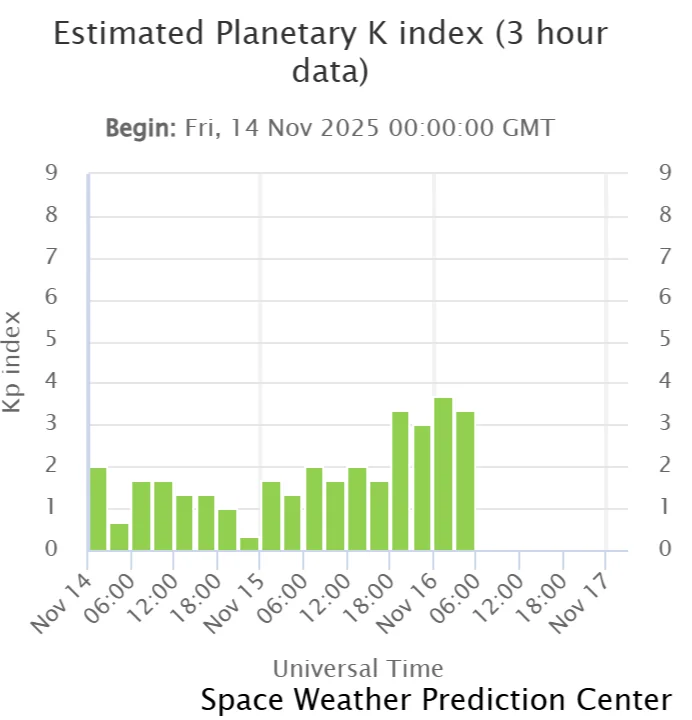
If you're curious, the NOAA Space Weather Prediction Center publishes free forecasts. I check it the way I check the weather. And if there's no geomagnetic activity and you're simply tired, rest anyway.
Further reading
On the science: Long-Term Study of Heart Rate Variability Responses to Changes in the Solar and Geomagnetic Environment (PMC, 2018); Influence of Electromagnetic Fields on the Circadian Rhythm (Biomedical Journal, 2023); Potential Influence of Geomagnetic Activity on Blood Pressure (Communications Medicine, 2025); and The Influence of Geomagnetic Storms on Cardiovascular Health (Journal of Medical Physics, 2025), a review of geomagnetic effects on heart attack and stroke risk.
For forecasts: the NOAA Space Weather Prediction Center for real-time alerts, and Spaceweather.com for daily updates in plain language.