Essays
Plants Are Part of Your Work Setup, Not Decoration
What plants in a workspace do for clear thinking and mental fatigue, with the research behind it.
18 Nov 2025 · 3 min read · By Sophie
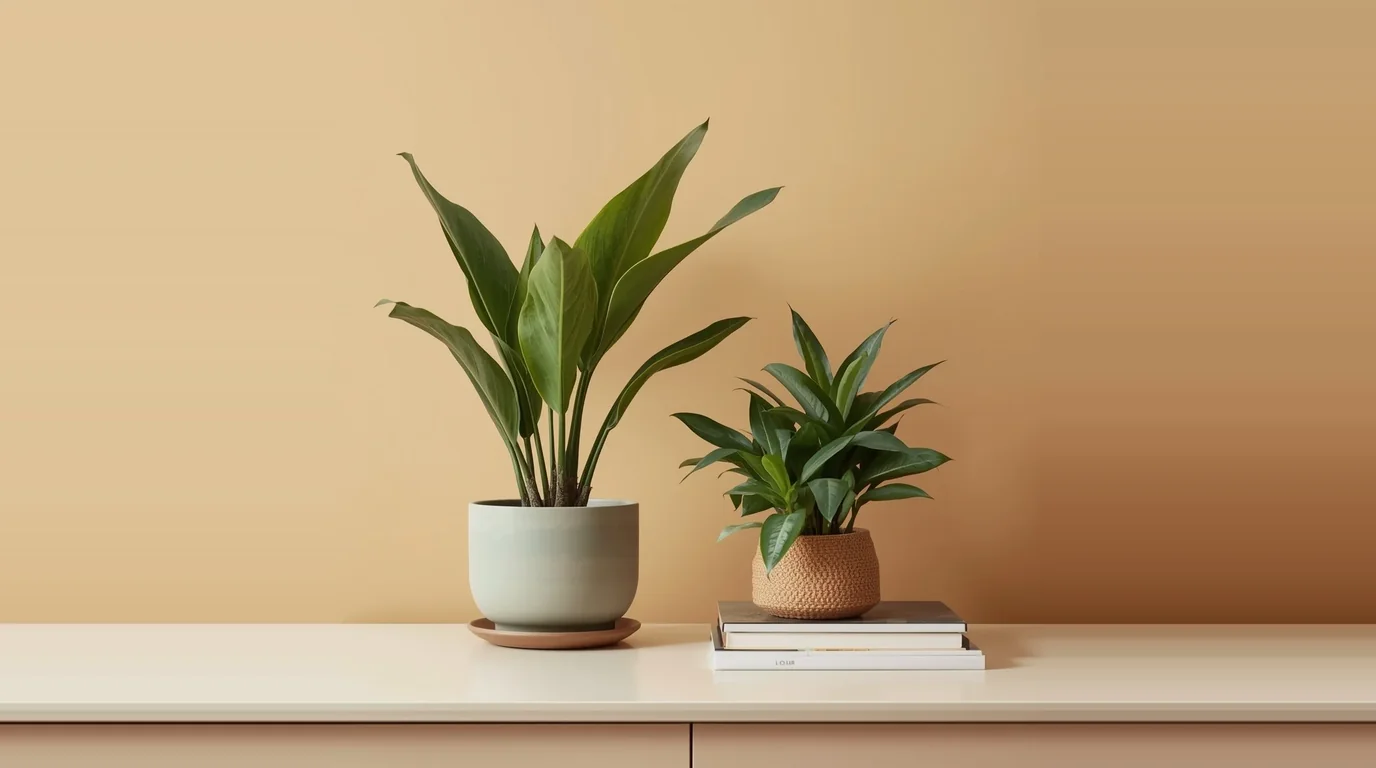
I work with a view of the garden and several plants within sight of my desk: an Aquatica I bought last spring, a Monstera that has grown faster than I expected, a Zamiifolia that copes with everything, and a Scindapsus Micans trailing across the shelf. A few smaller ones sit close by, including a Green Fantasy, a Petra and a little Orbifolia. They are there for the same reason as good lighting and a comfortable chair, because they make it easier to think, and there is research to back that up.

Why attention needs micro-breaks
Long stretches of concentration use what psychologists call directed attention, and it drains quickly. By mid-afternoon you read the same line twice, simple steps feel slow, and your mind has left the desk before you have. Looking at something natural gives that kind of attention a chance to recover, often without you noticing.
How plants help you focus
Rachel and Stephen Kaplan described the effect as soft fascination: moving leaves, natural light or a view of green hold your attention gently enough to let it rest. You don't need a forest. One plant on the desk helps, a garden view helps, and even a photo helps a little, though living plants do more. A 2016 systematic review of attention restoration research found that exposure to natural environments improved some measures of attention.
What the workplace research shows
A long-term study led from the University of Exeter found that adding plants to sparse offices raised productivity by about 15 percent. People felt more settled and made fewer errors, whatever kind of work they did. Other research suggests a rule of thumb of around 12 percent of your field of view taken up by greenery: enough to notice, not so much that the space feels crowded.
Plants also seem to lower stress, and the bigger effect is psychological rather than physical. A small amount of nature in the room helps you concentrate for longer.
The same principle as white space
When I build a website for a consultant or a small business, I take out noise, leave space, and keep pages readable so visitors can take things in without strain. A plant beside your monitor does the same job as white space on a page. Both give the mind somewhere to rest.
What to try in your own workspace
Face natural light if you can, since a window gives your attention regular resets. Choose living plants over artificial ones, because the small changes in movement and light are what catch the eye. Start with one or two in your line of sight and add more as the space allows. Pothos, Monstera, snake plants and ZZ plants all cope with irregular care.
A plant will not write your emails, though it may make writing them less tiring. I run my business from home in France, at a desk with a view of the garden and a few plants I water imperfectly, and they still help.
Further reading
Attention Restoration Theory systematic review, Ohly et al. (2016); Workplace greenery and productivity, Nieuwenhuis et al.; Optimal greenery dose for workplace wellbeing, Lei et al. (2021); Biophilic design and stress during cognitive tasks (2025); Restorative effects of biophilic design in workplaces, a systematic review (2024).